Summary
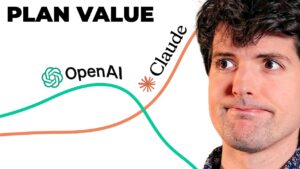
The AI Daily Brief covers the simultaneous release of Claude Opus 4.6 from Anthropic and GPT-5.3 Codex from OpenAI—two frontier models that dropped within 20 minutes of each other in February 2026, in what observers immediately compared to a competitive rap battle between the two labs. The episode breaks down each model’s capabilities, benchmarks, and strategic framing in detail.
Anthropic’s Opus 4.6 introduces million-token context windows with state-of-the-art long-context benchmark performance, “agent teams” (a rebranding of agent swarms) for parallelized multi-agent coordination where sub-agents can share findings and challenge each other, and “adaptive thinking” for dynamic reasoning effort allocation. To demonstrate agent teams, Anthropic tasked Opus 4.6 with autonomously building a C compiler without internet access—a process that consumed approximately 2 billion tokens, generated 140 million output tokens, and cost around $20,000 at standard API pricing. On benchmarks, Anthropic claimed top scores on Terminal Bench 2.0 (65.4%) and Humanity’s Last Exam. OpenAI’s GPT-5.3 Codex countered with a Terminal Bench 2.0 score of 77.3%—surpassing both Codex 5.2 (64%) and Opus 4.6—and nearly doubled GPT-5.2’s OS World score to 64.7%, measuring real-world computer use.
Early adopter Triple Whale reported Opus 4.6 as the best available model for front-end report design and creative orchestration, while enterprise tester Boxes & Levy measured a 10% improvement over Opus 4.5 on their hardest knowledge-work tasks. Both labs framed their coding advances as unlocking a broader class of knowledge work, from financial analysis to autonomous document creation.
📺 Source: The AI Daily Brief: Artificial Intelligence News · Published February 06, 2026
🏷️ Format: Keynote Launch