Summary
Nate B. Jones traces the diverging philosophies of OpenAI’s Sam Altman and Anthropic’s Dario Amodei — two figures who once worked at the same organization and now lead companies with fundamentally different theories of how safe AI gets built. The video argues that this divergence isn’t a product strategy choice but something encoded in the backgrounds and worldviews of the founders themselves.
Amodei’s path through Caltech, Stanford, and a Princeton PhD studying the electrophysiology of neural circuits — combined with a formative personal loss that crystallized his belief in scientific rigor — produced a leader who insists on understanding before deployment. This philosophy gave rise to Anthropic’s Constitutional AI, its AI Safety Levels modeled on biosafety standards, and a stated willingness to pause training if safety cannot be demonstrated affirmatively. Altman, shaped by Y Combinator’s learn-by-shipping culture, treats the public as a productive red team and iterates aggressively on real-world feedback — a posture that produced ChatGPT Health and sustained product velocity.
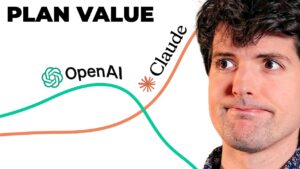
By January 2026, Jones argues, the two companies have diverged so completely that comparing Claude and ChatGPT is like comparing a hospital to a television studio. Both serve important purposes, but they are optimized for entirely different outcomes. The video is a useful primer for anyone trying to understand why these two dominant AI products feel so different to use — and why that gap is likely to widen rather than close.
📺 Source: AI News & Strategy Daily | Nate B Jones · Published January 12, 2026
🏷️ Format: Opinion Editorial