Summary
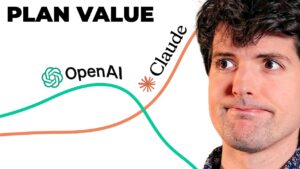
Nate B. Jones presents a strategic framework for AI product leaders built around what he calls “work primitives” — semantically meaningful units of work that agents must understand to operate reliably in enterprise environments. The central argument is that computer use, agents clicking buttons and filling forms, is a bridge technology rather than a durable competitive moat. The real platform power will accrue to companies that define the semantic meaning behind those actions: what a refund, a meeting reschedule, or a payment authorization actually implies in terms of permissions, consequences, and human intent.
Jones introduces a three-layer model — access, meaning, and authority — and uses coding agents as a concrete case study for why software development was the first domain where agents succeeded at scale. Codebases already carry dense semantic infrastructure: tests, linters, type systems, package managers, and git history that give agents meaningful feedback without constant human supervision. Most knowledge work lacks this, which makes coding a wedge rather than a template.
For product leaders, the practical takeaway is to focus on exposing semantic work primitives natively — making implicit human context legible to agents — rather than defaulting to screen-scraping approaches that will lose to purpose-built integrations over time. Jones references Codex computer use and MCP servers as current inflection points where these strategic choices are already being made, even if most builders haven’t framed them that way yet.
📺 Source: AI News & Strategy Daily | Nate B Jones · Published May 06, 2026
🏷️ Format: Opinion Editorial