Summary
Fahd Mirza tests Ling 3.0 Flash, a 124-billion-parameter mixture-of-experts model from Ant Group (Alibaba’s financial subsidiary), as a coding agent using the Hermes agent framework. The model — with only 5.1 billion parameters active per token — is available via free API on OpenRouter rather than Hugging Face, marking a distribution shift from Inclusion AI’s previous releases. Its architecture combines linear-complexity E-media delta attention in lower layers with gated multi-head latent attention in upper layers, sitting atop 512-expert MoE blocks with eight active per token, a design optimized for low memory footprint at serving time.
The test uses a deliberately broken web application with four planted bugs across three files: a frontend-backend communication failure, a POST route rejection, a Redis channel mismatch causing jobs to never be picked up, and a wrong database column preventing status from flipping to complete. Mirza runs the model without hints initially, then with partial guidance, evaluating whether it can autonomously diagnose and fix a realistic async pipeline.
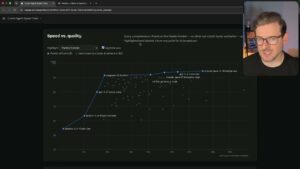
In practice, Ling 3.0 Flash struggles: it loops on virtual environment activation for over ten minutes, confuses states it has already modified, and requires repeated manual interruption to make forward progress. Despite benchmark claims showing competitiveness against models with 10–20× more active parameters on agentic and multilingual coding tasks, the real-world debugging session exposes a persistent gap between leaderboard numbers and production agent reliability. Mirza’s honest negative assessment is a useful counterweight to vendor-curated demos.
📺 Source: Fahd Mirza · Published July 23, 2026
🏷️ Format: Benchmark Test