Summary
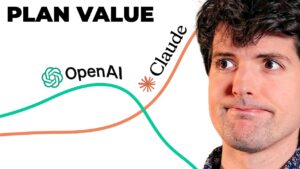
Fireship’s February 2026 video argues that the traditional SaaS business model—charging per human seat at high margins—is structurally threatened by a wave of recent AI developments. The video opens by noting that Adobe, Salesforce, ServiceNow, Shopify, and peers collectively shed $1 trillion in market cap as investors concluded that AI agents eliminate the need for per-seat licensing.
Seven specific developments are examined: OpenAI’s Codex app surpassed 1 million Mac downloads in its first week, enabling agentic workflows for non-developers; the underlying Codex 5.3 model adds image generation and research skills alongside a claimed 25% speed increase. Anthropic’s Claude Opus 4.6 expands beyond coding into legal analysis and financial modeling to justify enterprise pricing. On the open-weight side, Alibaba’s Qwen 3 Coder Next allows companies to self-host a capable coding brain behind a firewall, eliminating vendor lock-in. ZAI’s GLM5 targets long-horizon agentic systems engineering, while Minimax M2.5 delivers frontier-level reasoning at a fraction of the compute cost. Microsoft’s GitHub Agent HQ rounds out the picture by turning GitHub into a full agent orchestration platform covering project management, QA, and DevOps.
The throughline: as intelligence becomes abundant and cheap, per-seat pricing loses its logic. Open-weight models let enterprises own their AI stack outright, and orchestration platforms automate entire development workflows, leaving traditional SaaS dashboards with diminishing value propositions.
📺 Source: Fireship · Published February 17, 2026
🏷️ Format: News Analysis