Summary
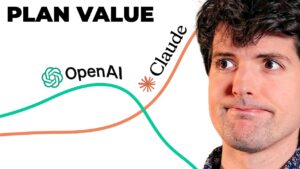
Nate B. Jones makes the contrarian case that Anthropic had a stronger week than the news cycle implied, anchoring the argument on a talent acquisition that received far less coverage than OpenAI’s headline hire. While OpenAI’s signing of Noam Shazeer — one of the original co-authors of “Attention Is All You Need” — dominated the conversation, Jones highlights that Nobel Prize-winning AlphaFold researcher John Jumper quietly left Google DeepMind for Anthropic, a move Jones treats as at least equally significant for the long-term trajectory of the two labs.
The analytical core of the video is a comparison of OpenAI’s and Anthropic’s model development strategies. Jones argues that OpenAI has leaned heavily on post-training improvements and reasoning-layer iteration (the o1/o3 release cadence), while Anthropic has maintained a more consistent pre-trained model cadence, most recently with Fable and Mythos. His thesis: pre-trained model scale is the foundation for recursive self-improvement, and Anthropic currently holds the largest, freshest pre-trained base — giving it a structural advantage even amid Fable’s temporary regulatory ban.
The video closes with what Jones frames as the most underreported AI story of the week: Midjourney’s announcement of a preventative medical imaging device — an affordable, fast whole-body ultrasound system targeting a billion scans per year — funded internally from the company’s $200 million in revenue with just 40 employees. Jones presents it as a signal to watch the wider AI ecosystem beyond the two dominant model labs.
📺 Source: AI News & Strategy Daily | Nate B Jones · Published June 22, 2026
🏷️ Format: News Analysis