Summary
Fahd Mirza benchmarks DFlash 2, a community-developed speculative decoding enhancement for the Qwen3.8-27B model, running live on an NVIDIA A100 GPU using the SGLang inference server. The video is a practical illustration of how the open-source ecosystem continues to push performance of released models well beyond what the original teams shipped.
Mirza first unpacks the mechanism clearly: standard speculative decoding uses a small draft model to guess several tokens ahead, then has the large model verify them in a single pass — good guesses yield free tokens, bad guesses cost little. DFlash 2 extends this by making the draft step itself parallel (all positions predicted in one pass) and keeping the top 16 candidates at each slot rather than just the top guess. A lightweight path selector scores neighboring pairs to find the most coherent sequence, plus a two-tab convolution lets positions learn from each other without breaking parallelism — the claimed result is one extra accepted token per verification pass for roughly 1% added latency.
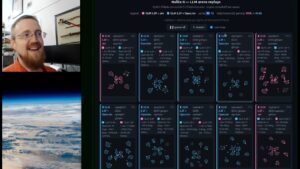
The benchmark is conducted fairly: identical prompts, same SGLang setup, measured in tokens per second. The baseline run yields approximately 28.9 tokens/second consistently across five prompts. The DFlash 2 run shows a clear improvement visible before the full results print. For practitioners looking to squeeze more throughput from Qwen3.8-27B on local hardware without changing the model itself, this video provides a reproducible, step-by-step setup guide.
📺 Source: Fahd Mirza · Published August 19, 2026
🏷️ Format: Benchmark Test