Summary
OpenAI’s GPT Image 2 recently dominated Image Arena, winning 93% of blind pairwise comparisons against competing models — a 26-point margin over the next-ranked system, Google’s Imagen 4. Analyst Nate B. Jones breaks down why that gap is historically unusual and what architectural changes produced it, covering three core additions: a thinking mode that reasons over composition and layout before rendering, live web search integrated directly into the generation loop, and native multi-frame coherence that produces up to eight consistent panels from a single prompt.
The video walks through concrete use cases enabled by these features, from a developer named Takuya Matsuyama generating a Hokusai-inspired app landing page from his own blog posts in a single prompt, to geographically accurate data visualizations rendered in children’s-book style using live-fetched depth data. Jones also examines the darker implications — the growing difficulty of trusting screenshots, receipts, and photographs as evidence — and flags that OpenAI’s content credentials and watermarking don’t survive a screenshot-and-recrop.
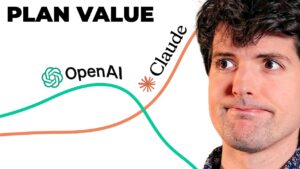
A substantial portion compares GPT Image 2 with Anthropic’s Claude Design (built on Claude Opus 4.7), which shipped just four days earlier and takes the opposite architectural bet: skipping the pixel layer entirely and outputting editable, clickable HTML instead. Jones frames both launches as downstream of the same shift — reasoning models entering the visual design stack — and offers role-specific guidance on when to reach for each tool.
📺 Source: AI News & Strategy Daily | Nate B Jones · Published April 25, 2026
🏷️ Format: News Analysis