Summary
Fahd Mirza puts MiniMax M3 through a hands-on evaluation, opening with a striking demonstration: a single prompt produces a fully self-contained, offline-capable Ebola situation tracker in a single HTML file — complete with an interactive country map, publication frequency charts, and no backend framework. M3 is an open-weight model; full parameter counts and architecture details were not yet published at time of filming, with a Hugging Face release described as imminent.
The technical centerpiece of the M3 release is Minimax Sparse Attention (MSA), designed to eliminate the quadratic compute bottleneck that makes long-context inference expensive. MSA performs a fast initial scan of the full context to identify relevant blocks, then applies full attention only to those — described simply as skimming a thousand-page book to find five relevant chapters before reading them. According to MiniMax’s technical report, this yields a 9x speedup in prefill and 15x speedup in decoding compared to their previous model, enabling a 1-million-token context window at practical inference cost.
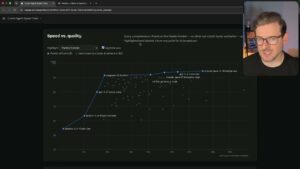
On benchmarks, M3 reportedly surpasses GPT-5.5 and Gemini on raw coding tasks and leads all tested models on SVG generation and autonomous agent benchmarks, with only Claude Opus 4.7 consistently ahead on reasoning and paper reproduction tasks. Mirza tests M3 via Hermes Agent in Ubuntu, tasking it with a full cross-file repository analysis — the model returns a 438-line technical report with data flow diagrams and deployment summaries from a single prompt in under five minutes. SVG generation is also tested given its top benchmark position.
📺 Source: Fahd Mirza · Published June 01, 2026
🏷️ Format: Benchmark Test