Summary
Creator and founder Bilawal Sidhu joins Riley Brown to trace how his AI agent setup evolved from an elaborate OpenClaw system to a Codex-centered workflow he now runs as his primary business operating system. Six months ago, Sidhu’s setup involved six specialized agents on a local M1 Max MacBook Pro — each built around a different persona (a coding agent modeled on John Carmack, a strategist modeled on Stargate SG-1’s Carter, even a spiritual advisor) — routing tasks via WhatsApp through Telegram to produce social analytics digests and ElevenLabs voice notes.
The conversation covers what drove the switch to Codex: the built-in browser eliminates the flakiness of Chrome-based computer-use attachments, making complex multi-step agent execution significantly more reliable. Sidhu and Brown also compare GPT-4o (referred to throughout as 5.6) and Claude, with Sidhu finding the former noticeably weaker for writing tasks while Claude Code handles complex coding workflows well. The discussion of OpenClaw vs. Codex is detailed enough to be practically useful for anyone evaluating agent platforms for real business use.
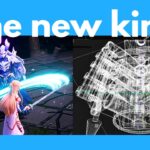
A substantial portion of the episode covers Sidhu’s work at the intersection of generative AI and 3D visual effects — specifically using spatial RAG techniques to condition video generation models on real-world geometry, enabling what he describes as “reskinning reality on demand.” He also recounts vibe-coding a Palantir simulation video that reached 2 million views on YouTube and is now being developed into a startup, offering a concrete example of how generative AI workflows translate into content and commercial traction.
📺 Source: Riley Brown · Published August 16, 2026
🏷️ Format: Podcast