Summary
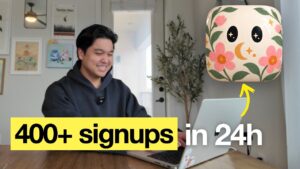
Chris Raroque walks through five concrete techniques he uses to make his productivity apps feel premium, using his calorie-tracking app Amy as the primary case study. The video focuses not on features but on the craft layer — animations, illustrations, typography, onboarding flows, and UI consistency — arguing these are what separate polished consumer apps from generic AI-generated output.
On animations, Raroque demonstrates four levels of implementation for a single text-summarization feature: no feedback, a toast notification, a basic animation, and finally a refined purple-orange gradient animation that took over six hours and fifty-plus prompts to perfect using Claude Code. He argues that users can perceive the difference in effort, and that the willingness to iterate extensively is what distinguishes professional app builders. For illustrations, he explains why the proliferation of ChatGPT Image generation has leveled the field, why working with a professional artist (illustrator Cecilia) still delivers a meaningful edge, and how MidJourney’s loop feature can animate static images without additional design tools.
Additional topics include using Whisper Flow for voice-to-text prompting during heavy iteration sessions — particularly useful when making thirty-plus variations of an image or animation — and using Mobbin’s animation reference library to train design instincts. The overall message is that AI tools dramatically lower the floor for building functional apps, but deliberate, high-iteration effort on the polish layer is what raises the ceiling and drives user retention.
📺 Source: Chris Raroque · Published August 03, 2026
🏷️ Format: Workflow Case Study