Summary
OpenClaw, the open-source agentic framework, underwent a significant architectural shift in April 2026 — moving from a viral demo tool to what creator-turned-OpenAI-employee Peter Steinberger’s former project now calls a “runtime abstraction for serious agentic work.” This video from Nate B Jones breaks down what that evolution actually means for builders: task orchestration, memory updates, provider routing, and multi-step workflow execution all shipped at a pace described as “absurd for an open source agent framework.”
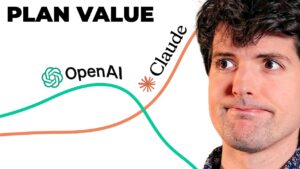
The most consequential developments covered aren’t about OpenClaw’s features themselves, but about the model layer surrounding it. Anthropic moved to enforce API-based usage for agent loops running on Claude, effectively reclassifying Claude from an always-on substrate to a premium metered component — a decision the video frames as financially rational but costly in developer goodwill. Meanwhile, OpenAI took the opposite approach: Sam Altman publicly confirmed on May 1st that OpenClaw is now available under all paid ChatGPT tiers, with Codex accessible via an OAuth route described in OpenClaw’s own provider docs.
The strategic takeaway Jones argues for is model-agnostic design — building workflow loops that can swap LLMs without re-architecting core logic. With memory as the persistent layer and the runtime as the abstraction, builders are no longer locked to whichever provider is currently winning the model war. This is practical architectural advice grounded in a real competitive inflection point happening in real time.
📺 Source: AI News & Strategy Daily | Nate B Jones · Published May 07, 2026
🏷️ Format: News Analysis