Summary
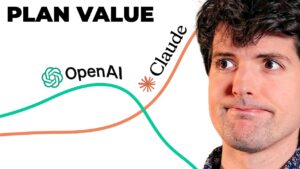
Following Anthropic’s decision to ban OpenClaw from accessing Claude models through its $20 and $200 subscription tiers, users are now required to pay per token via the API. For heavy users, this shift could translate to hundreds of dollars daily. Creator Alex Finn responds with a structured cost-containment architecture designed to keep spending close to the old flat-rate price.
The core strategy is a tiered “brain and muscle” system: Claude Opus 4.6 handles orchestration — planning tasks and verifying their completion — while cheaper models handle execution. Finn argues Opus is uniquely reliable at confirming task completion, a capability he says no competing model from OpenAI, Qwen, or Gemini currently matches. For users on average hardware, he recommends pairing Opus with GLM 5.1, a budget ChatGPT tier, or an existing Google subscription for routine coding and writing tasks. He claims an eight-hour road trip’s worth of non-stop OpenClaw use cost him just $10 in API tokens under this setup.
For users with high-end local hardware — such as a 512GB Mac Studio or a DJX Spark — the video goes further, recommending locally-hosted Qwen 3.5 27B for coding and Gemma 4 for continuous web scraping and research tasks, reserving Opus API calls strictly for high-level coordination. The video includes step-by-step configuration instructions for routing each task type to a different model provider within OpenClaw.
📺 Source: Alex Finn · Published April 05, 2026
🏷️ Format: News Analysis