Summary
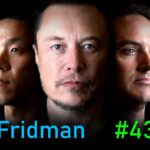
Lex Fridman’s second conversation with Demis Hassabis — CEO of Google DeepMind, Nobel Prize winner in Chemistry, and one of the architects of modern AI — covers ground that ranges from a provocative new scientific conjecture to the near-term future of recursive AI self-improvement. The episode opens with Hassabis presenting what he calls a central thesis from his Nobel Prize lecture: that any pattern generated or found in nature can be efficiently discovered and modeled by a classical learning algorithm, because natural systems have structure imposed by evolutionary and physical processes.
Hassabis grounds the conjecture in DeepMind’s track record: AlphaFold solved protein structure prediction because proteins fold along low-dimensional manifolds shaped by evolution; AlphaGo mastered Go by building a model of the game’s combinatorial space rather than brute-forcing it. He extends this logic to video generation — noting that Veo, DeepMind’s video model, can model fluid dynamics and specular lighting surprisingly well after training on YouTube, suggesting it has reverse-engineered underlying physical structure. He is careful to note the conjecture may not hold for man-made or abstract domains like prime factorization.
The conversation also covers AlphaEvolve and its implications for recursive self-improvement, the human-in-the-loop constraints that currently govern such systems, and how human intuition about code correctness will have to adapt as AI systems grow more capable. For researchers and practitioners tracking the theoretical foundations of frontier AI, this is a high-signal episode from one of the field’s most accomplished figures.
📺 Source: Lex Fridman · Published July 23, 2025
🏷️ Format: Interview