Summary
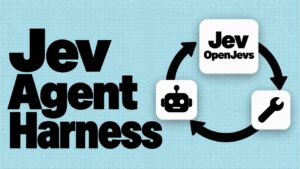
Cole Medin examines whether agent harnesses — coordination layers that connect multiple AI context windows to handle long-running tasks — finally make fully delegated “vibe coding” viable, and where the remaining gaps are. He traces the evolution from prompt engineering (optimizing single interactions) to context engineering (managing full sessions) to harnesses (stitching sessions together with checkpoints and handoffs), arguing each stage builds on rather than replaces the previous one.
The video surveys real implementations: LangChain’s DeepAgent, Anthropic’s initializer-coder architecture, and the Manis platform, all of which have taken different approaches to the same coordination problem. Medin identifies two unsolved issues limiting adoption: the non-determinism of how agents self-validate and hand off between sessions, and the difficulty of calibrating when human-in-the-loop checkpoints are necessary versus when full autonomy can be trusted. His conclusion is that harnesses reduce the grunt work but don’t eliminate structured engineering.
An OutSystems Agent Workbench segment grounds the discussion in enterprise deployment realities — audit trails, per-request tracing, environment governance — illustrating the gap between harness prototypes and production-grade agentic systems. The video is aimed at developers already familiar with coding agents who want a conceptual map of where agentic infrastructure is heading.
📺 Source: Cole Medin · Published December 18, 2025
🏷️ Format: Deep Dive