Summary
Episode 231 of the Moonshots podcast, recorded with co-host Alex joining from Stuttgart, covers a dense week of frontier AI model releases: Anthropic’s Claude Sonnet 4.6, xAI’s Grok 4.2, Google’s Gemini 3 with Deep Think mode, and the OpenClaw initiative. Alex provides the most technically grounded analysis, highlighting that Sonnet 4.6 — not even Opus 4.6 — has taken the state-of-the-art position on GDP-val (Gross Domestic Product eval), a benchmark designed to measure AI performance on knowledge work tasks, as well as leading on several computer use benchmarks.
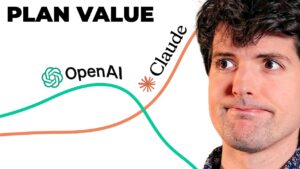
The discussion draws a clear contrast between the scaling strategies of the major labs: Anthropic is holding price per token steady while increasing capabilities with each Sonnet release, whereas OpenAI is reducing cost per token through distillation while keeping capabilities relatively constant. Computer use is identified as an emerging killer application across multiple models, with firsthand accounts of Opus 4.6 delivering results described as ‘borderline magical’ for software engineering tasks — reinforcing Anthropic’s thesis that coding is the critical path to recursive self-improvement.
The episode also covers energy and data center infrastructure requirements accelerating alongside model capability, Meta’s smart glasses with real-time facial recognition, and the broader competitive dynamics between U.S. and Chinese AI development. The hosts connect the sudden viral interest in AI disruption narratives to the specific capability jumps demonstrated by Sonnet 4.6 and OpenClaw as concrete inflection points that shifted mainstream perception of AI’s near-term impact on knowledge work.
📺 Source: Peter H. Diamandis · Published February 18, 2026
🏷️ Format: News Analysis