Summary
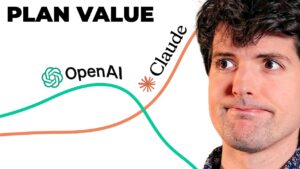
Anthropic published a detailed blog post and technical report accusing three Chinese AI labs — DeepSeek, MiniMax, and Moonshot AI — of conducting what it describes as industrial-scale distillation attacks against its Claude models. The alleged operation involved over 24,000 fraudulent accounts and more than 16 million synthetic exchanges, specifically engineered to extract Claude’s capabilities in agentic reasoning, tool use, and chain-of-thought. MiniMax alone is said to have generated over 13 million exchanges, and reportedly pivoted within 24 hours of a new Claude release to redirect traffic at the updated model.
Fahd Mirza breaks down the technical and ethical dimensions of the accusation. Model distillation — training a smaller model on outputs from a more capable one — is standard industry practice, and Mirza raises the uncomfortable counterargument: that Anthropic and other major labs built their own systems on vast quantities of scraped internet content without explicit creator consent, leaving the moral framing feeling selective to many observers.
The video’s most substantive contribution is its treatment of the safety angle: when a frontier model is distilled without its accompanying alignment work, the resulting system may retain capabilities while losing guardrails designed to prevent harmful outputs. That risk, Mirza argues, is a genuine concern for the entire AI ecosystem regardless of how one views Anthropic’s competitive grievances — and it surfaces a structural problem in how all major labs are racing to advance capabilities under enormous pressure to cut corners.
📺 Source: Fahd Mirza · Published February 23, 2026
🏷️ Format: News Analysis