Summary
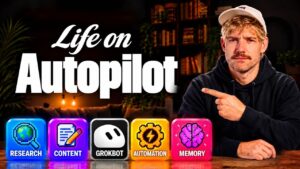
Nate Herk walks through how he built a fully integrated AI Operating System (AIOS) and personal second brain using GPT-6 Astra and OpenAI’s Codex desktop app. The video shows his live production setup — a knowledge graph connecting his business wiki, meeting notes, every YouTube video he has published, Claude memory exports, Codex memory, and ongoing projects — all queryable through a single interface that feels, in his words, like talking to a co-founder rather than a chatbot.
Herk introduces his “Four C’s” framework — Context, Connections, Capabilities, and Cadence — as the conceptual backbone for building a system like this. Context covers stable information (business structure, goals, audience avatars); Connections covers live data feeds (email, Slack, ClickUp, calendar) that the AI can reach for just-in-time. He also demos a custom OS dashboard built with Codex that aggregates calendar events, subscriber counts, community pulse from YouTube comments, and industry signals from X.
The tutorial portion shows a complete from-scratch setup: creating a local project folder in Codex, installing a resource pack via URL, answering a seven-question onboarding flow, and watching Codex populate a structured file system with context and agent configuration files. Viewers who follow along will end up with a working AIOS scaffold they can customize with their own business data.
📺 Source: Nate Herk | AI Automation · Published September 07, 2026
🏷️ Format: Tutorial Demo