Descriptions:
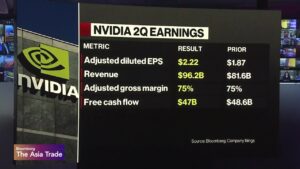
Bloomberg Tech interviews Doug Huber, deputy chief investment officer at Wealth Enhancement Group — a firm holding approximately $1.9 billion in NVIDIA stock — immediately following NVIDIA’s latest earnings call. The headline figure is a projected 70% revenue growth for NVIDIA’s next fiscal year, but Huber argues the more important signal is that this growth is described by NVIDIA CFO Colette Kress as supply-constrained rather than demand-constrained. In Huber’s reading, actual growth could have reached 100-120% with sufficient chip production; the binding constraint is manufacturing capacity, not customer appetite.
The conversation examines NVIDIA’s continued concentration of revenue in hyperscalers — Microsoft, Google, Amazon, and Meta — who have already committed orders for the following year. Kress distinguished these buyers from sovereign AI funds, neo-clouds, and enterprise customers, who require more complex total-infrastructure deployments rather than pure chip purchases. Huber flags an open question about whether those emerging channels deliver equivalent gross margins, given the higher implementation lift involved.
NVIDIA stock initially declined after the earnings release on margin concerns — guidance suggests margins may compress slightly next year — before rallying sharply as investors processed the durability-of-demand narrative, putting the stock on track for its best single-day performance since April 2025. Huber says the shift in framing — from “is demand slowing?” to “can they build enough?” — represents a meaningful change in how the market is thinking about the AI compute infrastructure cycle.
📺 Source: Bloomberg Tech · Published August 27, 2026
🏷️ Format: News Analysis