Summary
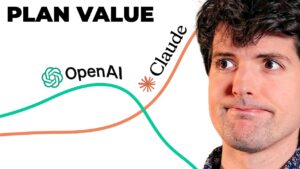
Nate B Jones of AI News & Strategy Daily builds a model-selection framework for professionals navigating an AI landscape reshaped by the 18-day Fable 5 ban that ended July 1, 2026. His central argument: the teams that weren’t disrupted were those that never tied their workflows to a single model — they owned the harness, routed to alternatives, and kept moving. The video is structured as practical guidance for avoiding that dependency trap going forward.
The core framework distinguishes a “daily driver” — a frontier model like Claude or ChatGPT trusted for open-ended, judgment-heavy work where getting it right matters more than cost — from a “cheap workhorse” like GLM 5.2, which handles familiar, center-of-distribution tasks (meeting summaries, PowerPoint drafts, CRM cleanup, routine code edits) at a fraction of the price. Jones argues GLM 5.2’s value is often underappreciated because most coding-heavy AI benchmarks miss the enormous volume of non-code business artifacts people produce daily. Frontier models, by contrast, earn their premium when the shape of the work isn’t yet clear. Additional models covered include Qwen, Kimmy K2.5, and specialist image tools like Flux, Z image, and Grok image, plus LTX for video workflows.
The video tailors recommendations to four roles: individual contributors inside companies (often constrained by IT policy), team leads, small business owners with more model flexibility, and developers building on direct API access. The overarching message is strategic: identify the five or six recurring artifacts most critical to customers, then build the simplest repeatable process to generate them — regardless of which model sits underneath.
📺 Source: AI News & Strategy Daily | Nate B Jones · Published July 02, 2026
🏷️ Format: Opinion Editorial