Summary
TheAIGRID breaks down what may be the most consequential AI policy story of 2026: the US government’s decision to control access to frontier AI models, starting with a customer-by-customer staggered rollout of GPT-5.6 that OpenAI has agreed to cooperate with. The video works through 17 key implications, arguing that this marks a fundamental departure from AI’s democratization promise and a new era of permissioned access to the most capable systems.
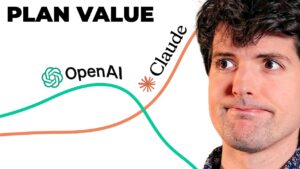
The analysis examines cascading second-order effects: Chinese open-source models currently trail US frontier labs by roughly 9 months, but a mandated slowdown in public releases will let them close that gap rapidly. The creator argues this creates a near-inevitable fork — either China agrees to equivalent release restrictions (unlikely) or the US restricts or bans Chinese models, a scenario he puts at a 9-month window or less. He also critiques Anthropic’s marketing strategy around Claude, arguing that Dario Amodei’s repeated congressional testimony framing frontier open-source models as a national security threat directly invited the regulatory dynamic now unfolding.
The video frames the internal-to-public model gap — previously around 5-6 months due to post-training and red-teaming cycles — as now potentially stretching to a full year or more. For developers, startups, and anyone building on frontier model access, the creator warns this trajectory risks making AI “the most permissioned technology ever built,” with deep implications for competitive dynamics between open and closed ecosystems.
📺 Source: TheAIGRID · Published June 28, 2026
🏷️ Format: Opinion Editorial