Summary
Rachel Lee Nabors — formerly at Mozilla on Firefox DevTools, the W3C, Microsoft Edge, and the React team, now at Arize — presents a practical, measurement-driven case for replacing frontier model API calls with local, task-specific models. The talk covers four cost dimensions of cloud inference: security exposure from sending data to remote servers, latency (research shows 4 seconds is the believability ceiling for users, a threshold many frontier calls exceed), uncontrollable third-party inference spend that compounds with agentic workloads, and complete unavailability offline.
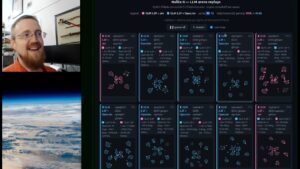
Nabors outlines a model-selection cheat sheet matching task types to appropriate architectures: vision tasks to MobileNet, YOLO, or MediaPipe; audio to Whisper or Wave2Vec2; conversational and analytical tasks to small language models (SLMs) like Gemma or Qwen. She then walks through a live capability evaluation using Phoenix, Arize’s open-source observability platform, comparing Claude Sonnet as a baseline (2.9-second average latency, $0.22 for 14 tasks) against four on-device candidates: Qwen 2.5 Instruct (1.5B parameters, 1GB on disk), Qwen 3 (1.7B), Llama 3.2 (3B, 2GB), and Gemma 4 E2B (5B, 3.1GB).
The evaluation framework covers structural validity, factual consistency, length compliance, and latency at P50 and P95 — using LLM-as-judge for semantic quality. Local models run at zero inference cost since compute is pushed to the consumer device. Engineers looking to reduce cloud API spend, improve latency, or build offline-capable AI features will find a repeatable methodology and concrete model comparisons they can apply immediately.
📺 Source: AI Engineer · Published June 29, 2026
🏷️ Format: Benchmark Test